
The agent stack just got its operating system
In a single week, every layer of the AI agent stack advanced simultaneously: Microsoft shipped Agent 365 as an enterprise control plane for governing fleets of AI agents, Google open-sourced ADK for TypeScript so web developers can build multi-agent systems, Meta acquired a social network where agents talk to each other, and Mandiant's founder raised $190M to build autonomous security agents. For product builders, the signal is unmistakable — agents have crossed from prototype to platform, and the race to define how they're built, deployed, managed, and secured is happening right now.
Microsoft
Microsoft launches Agent 365 and Copilot Wave 3 with Anthropic model support
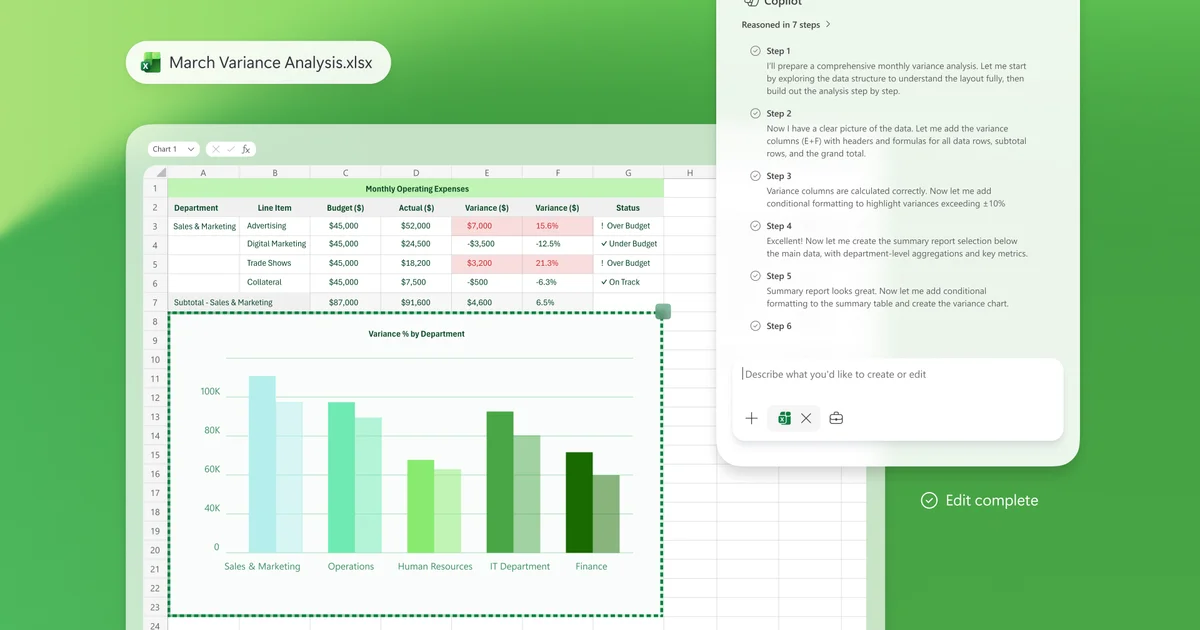
Microsoft unveils Agent 365, a dedicated control plane for deploying and governing agentic AI across enterprises, alongside Copilot Wave 3 which brings agentic capabilities to Word, Excel, and Outlook. The new E7 bundle launches May 1 at $99/user with Anthropic Claude model support.
microsoft.com
Something happened this week that no single headline captures. Every layer of the AI agent stack shipped something meaningful within the same five-day window. Build tools, deployment platforms, communication infrastructure, security products. Not incremental updates from one vendor, but simultaneous advances across the entire stack from four separate companies with four separate motives.
The pattern matters more than any individual announcement.
Microsoft launched Agent 365, a dedicated control plane for managing fleets of AI agents across the enterprise. It includes dashboards for adoption, operational health, and compliance reporting. Copilot Wave 3 ships alongside it, bringing agentic drafting to Word, multi-step analysis to Excel, and inbox triage to Outlook. The E7 Frontier Suite bundles it all at $99/user starting 1 May, with Anthropic Claude model support included. Microsoft is treating agent management as an operating system layer, the same way they treat identity and device management through Entra and Intune.
At the build layer, Google open-sourced ADK for TypeScript, giving web developers a code-first framework for multi-agent systems. The bet here is that TypeScript's strong typing makes agent-to-agent data contracts reliable enough for production. It's model-agnostic, deployment-agnostic, and integrates natively with MCP. Google is positioning this as the way most developers will build their first agent, using the same languages and patterns they already know rather than dragging boxes in a low-code builder.
Then there's the communication layer. Meta acquired Moltbook, a Reddit-like platform where AI agents post, comment, and vote while humans can only observe. It sounds like a novelty until you consider that Meta's Superintelligence Labs team is absorbing the founders starting 16 March. Meta is making a serious bet that agents will need their own social infrastructure: coordination protocols, reputation systems, content moderation. All looking more like a social network than an API gateway.
The security question
Wherever agents proliferate, security follows. Kevin Mandia raised $190M for Armadin, building autonomous security agents with backing from Accel, GV, Kleiner Perkins, and In-Q-Tel (the CIA's venture arm). Armadin's agents complete in minutes what security teams previously spent days on, and they're already deployed with Fortune 100 companies after six months. When the founder who sold Mandiant to Google for $5.4B starts his next company in agent security, that tells you something about where the threat surface is heading.
The way I see it, the signal from this week is structural. Agents have crossed the threshold from 'interesting demo' to 'thing that needs governance, tooling, networking, and its own security stack'. That's the definition of a platform shift. When you need compliance dashboards, typed data contracts, social infrastructure, and autonomous threat response all within the same product category, you're no longer talking about a feature. You're talking about a new layer of the technology stack.
The question for product builders is which of these layers to bet on. The control planes will consolidate fast; Microsoft has an obvious advantage there. The build tools are fragmenting, with ADK joining LangChain, CrewAI, and a dozen others. The communication layer is genuinely uncharted. And the security layer is going to be mandatory before most teams realise they need it.
If you're building agents today, you're also choosing your position in a stack that's forming in real time.
Read the original on Microsoft
microsoft.com