
The AI giants are building empires, not products
OpenAI buys a media company, launches self-serve ads, and cuts prices to lock in developers. Microsoft ships its own models to compete with the partner it funds. Google opens Gemini's doors and offers to import your ChatGPT history. These aren't product announcements — they're land grabs for distribution, narrative control, and platform lock-in. The race has shifted from who has the best model to who owns the surface area around it.
TechCrunch
OpenAI acquires TBPN, the buzzy founder-led business talk show
OpenAI acquired tech talk show TBPN for a reported low hundreds of millions of dollars, marking its first move into media ownership. The show will report to OpenAI's chief political operative Chris Lehane while claiming editorial independence.
techcrunch.com
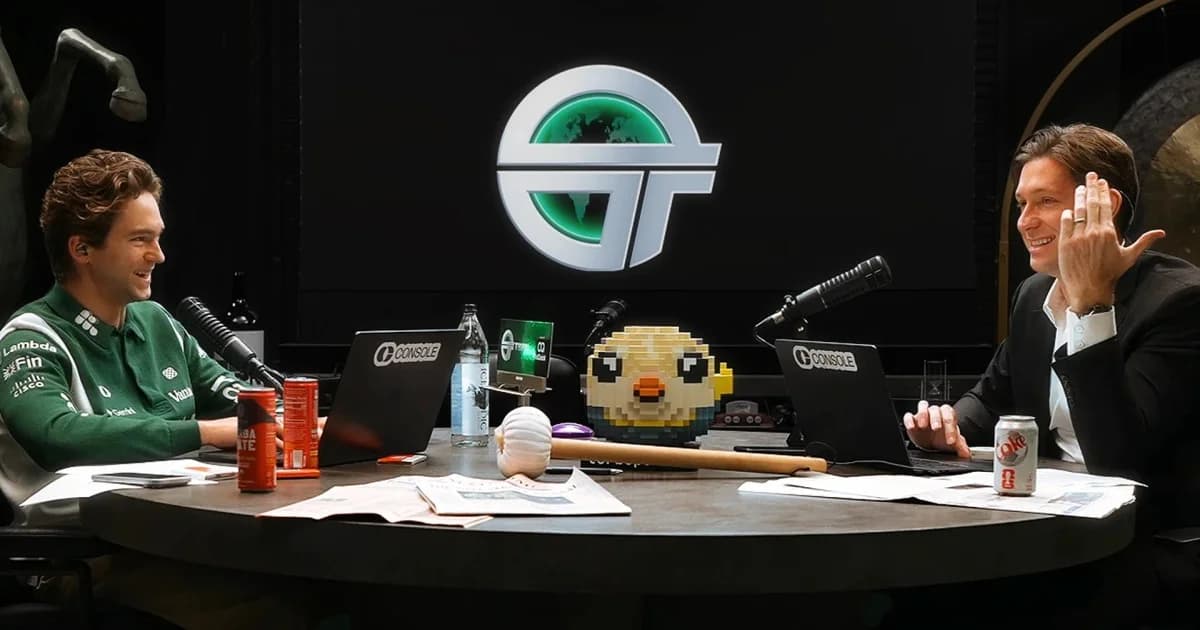
The race stopped being about models weeks ago. What happened on 2 April made it official: the AI giants are building empires, and the model is just the excuse to acquire everything around it.
OpenAI bought a media company. TechCrunch reported that OpenAI acquired TBPN (the daily tech talk show hosted by John Coogan and Jordi Hays) for a reported low hundreds of millions of dollars. TBPN was on track for $30M in revenue this year, with its own advertising business and editorial voice. Under OpenAI, that advertising business winds down, the show reports to Chris Lehane, OpenAI's chief political operative, and "editorial independence" is promised in the way it's always promised when a company with an IPO on the horizon buys the people covering the industry.
The same day, OpenAI announced that ChatGPT's ad pilot had crossed $100M in annualised revenue in just six weeks, with 600+ advertisers active and self-serve tools launching this month. The $200K minimum that kept small businesses out is gone. And OpenAI cut ChatGPT Business pricing from $25 to $20 per seat while rolling out usage-based Codex seats with no rate limits. Codex usage within Business and Enterprise teams has grown sixfold since January.
Read those three moves together. OpenAI is simultaneously acquiring narrative influence, building an advertising machine, and cutting prices to lock in the developer base. It's building a platform monopoly around distribution and developer dependency, monetised through advertising, before the market can establish alternatives.
Microsoft's quiet counter-move
Meanwhile, the company that has invested $13B in OpenAI is hedging that bet. TechCrunch reported that Microsoft released three foundation models through Microsoft Foundry: MAI-Transcribe-1 delivers state-of-the-art speech-to-text across 25 languages at roughly half the GPU cost of competitors. MAI-Voice-1 generates 60 seconds of expressive audio in under one second on a single GPU. MAI-Image-2 debuted at #3 on the Arena.ai leaderboard. All three are priced to undercut OpenAI and Google.
The message is clear: Microsoft funds OpenAI with one hand and competes directly with the other. The MAI models are production-ready and cheaper. Microsoft is building its own model supply chain so it never depends entirely on a partner that is rapidly becoming a competitor. When your investor starts undercutting your prices, the relationship has changed.
The pattern
The thread connecting all four stories is surface area acquisition. OpenAI wants to own both the media narrative and the developer workflow, with advertising revenue bridging the two. Microsoft wants to own the model layer so it doesn't have to rely on OpenAI owning it. Both companies understand the same thing: whoever controls the surface around the model controls the economics of the industry.
I think this is the moment the AI industry stopped resembling a technology race and started resembling the platform wars of the 2010s. The question is no longer "whose model is smartest?" It's "whose ecosystem is hardest to leave?" OpenAI is answering that question by buying media properties, subsidising developer seats, and building an ad business. Microsoft is answering it by ensuring the models themselves are interchangeable, as long as they're all running inside Microsoft.
For anyone building on these platforms, the implication is practical: the tools getting cheaper and the access getting easier are not gifts. They're acquisition costs. And the moment the market share is locked in, the pricing will change.
Read the original on TechCrunch
techcrunch.com