
The creator tool is becoming the whole platform
Google Vids lets people star in their own AI videos, Roblox is bringing AI-powered game creation to mobile, and Beehiiv is adding AI alongside subscriber chat. The shared thread is the collapse of creation, publishing, audience engagement and monetisation into the same product surface, which changes what builders have to design for.
TechCrunch
Google Vids now lets you star in your own AI videos
Google Vids now lets you star in your own AI videos.
techcrunch.com
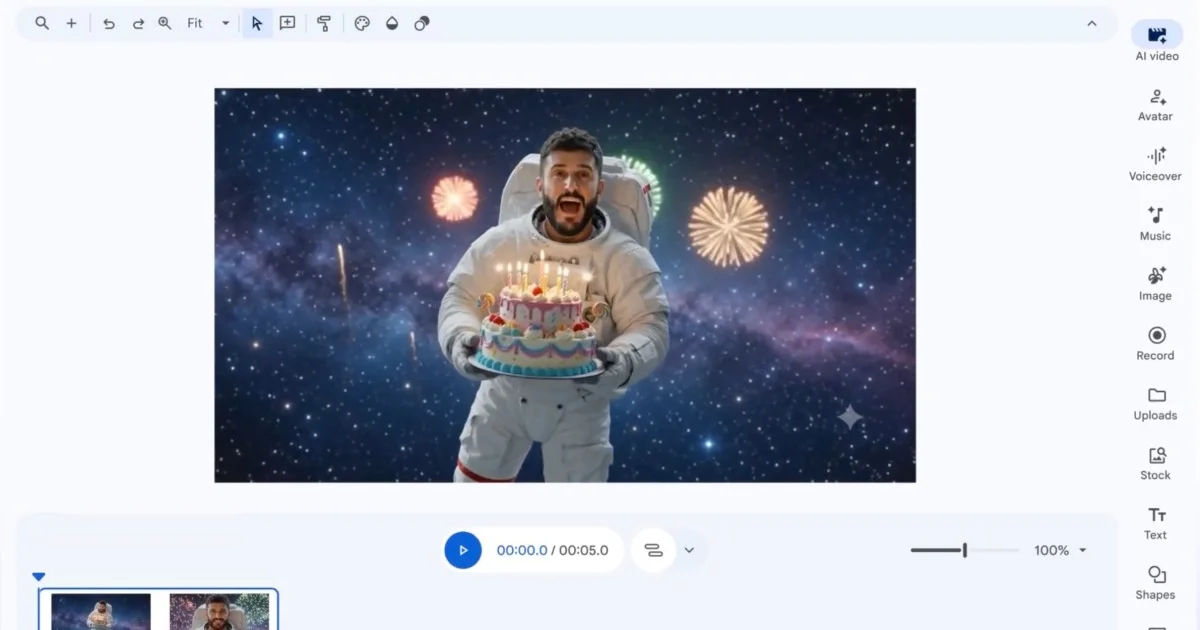
A selfie and a voice recording are now enough to put “you” inside a Google-made AI video. That is the small absurdity sitting inside Google Vids’ new avatar feature, as TechCrunch reported: the office presentation tool is drifting towards personalised video production, with Google’s generation tools and watermarking sitting quietly underneath.
The lazy read is that AI is making creation easier. True, but incomplete. The sharper read is that the creator tool is becoming the platform.
Creation, publishing, audience engagement and monetisation are being pulled into the same product surface. That changes the job for builders. You are no longer designing a “make” button. You are designing the loop that starts with making, moves into distribution, measures audience reaction, and then feeds the next act of creation.
The prompt box wants the whole chain
Google Vids is a clean example because its original shape was familiar: workplace video, presentations, internal comms. Add a custom avatar that looks and sounds like the account holder, and the product stops feeling like a slide-adjacent utility. It starts to look like a lightweight identity, production and publishing system.
The detail that matters is the account tie and watermarking, not the avatar alone. Google is not treating creation as a free-floating act. It is binding generated media to identity and provenance. That is a platform move, because once the output can impersonate the user, trust and distribution become product requirements, not policy footnotes.
Roblox is making the same move from the opposite direction. TechCrunch reported that Roblox is launching an AI-powered game-creation feature in its mobile app, putting creation closer to the same surface where users already play and discover games.
Again, the obvious story is “AI game creation”. The more interesting bit is discovery. When creation gets cheap, sorting becomes the scarce layer. The platform cannot celebrate infinite prototypes unless it also owns the ranking system that decides which prototypes get an audience.
This is vertical integration in economic clothing. Control more of the chain, keep more of the margin, and collect better behavioural data. In the AI creator era, the chain is not factory-to-shelf. It is prompt-to-output-to-feed-to-payment-to-next-prompt.
Beehiiv makes the pattern plain. TechCrunch reported that the newsletter platform now lets subscribers chat with each other and is adding AI. That is more than a newsletter tool with some AI sprinkled on top. It is an attempt to keep the writer, reader, discussion and revenue stack in one place.
For creators, that may be convenient. For platform designers, it raises the bar. If your AI feature helps someone make a thing but sends them elsewhere to find an audience, build trust, moderate replies or get paid, you have probably built a feature, not a business.
Abundance breaks the old interface
AI makes the blank page less scary. It also makes output less special. A video avatar, a playable game prototype and an AI-assisted newsletter can all be produced faster than before. So the product question shifts from “can the user create?” to “what happens after they create?”
That “after” is where many AI products still feel thin. They generate, then shrug. The next generation of durable products will care about provenance, retention, community quality, creator incentives and monetisation from day one.
The winners will not be the tools that make the most stuff. They will be the ones that make creation legible, distributable and worth returning to. The prompt box is becoming the front door; the real platform is everything it connects to.
Read the original on TechCrunch
techcrunch.com