
The backlash is becoming part of the interface
Several of today’s most interesting AI stories are not about raw capability; they are about whether people want AI around them at all. Librarians are teaching people to avoid AI, Lorde is rejecting AI glasses as a vibe, Anthropic’s ad is creeping people out, and OpenAI’s hardware push is testing whether a dedicated AI device can feel useful rather than invasive. For product builders, the message is blunt: consent, taste and reversibility are becoming product features.
TechCrunch
Librarians are hosting viral ‘Avoiding AI’ workshops for people who are fed up with Big Tech
Librarians are hosting viral ‘Avoiding AI’ workshops for people who are fed up with Big Tech.
techcrunch.com
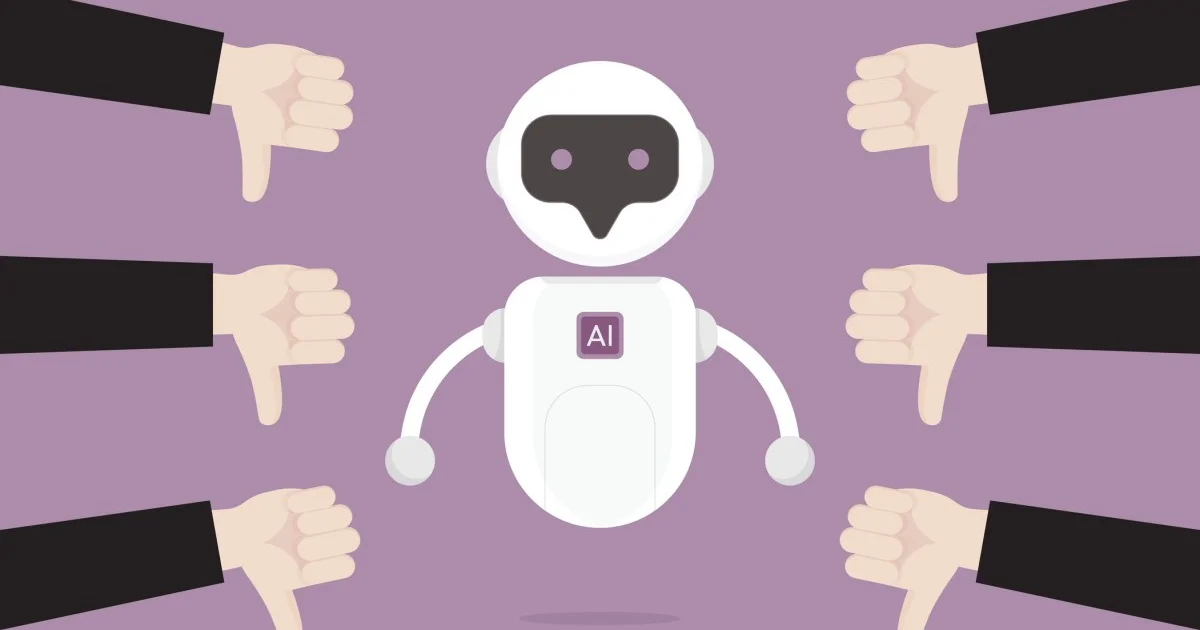
The most revealing AI product demo this week may be a librarian showing someone where the off switch is.
That is the funny, slightly brutal implication of the viral “Avoiding AI” workshops TechCrunch reported: for some users, AI literacy now includes knowing how to disable the feature. Not prompt it better. Not integrate it into a workflow. Turn it off.
The obvious read is that this is a backlash against AI. I think that is too broad. People are not rejecting intelligence in software in the abstract. They are rejecting AI that arrives as a default, speaks in the wrong tone, asks for social permission it has not earned, or makes everyday spaces feel monitored.
The backlash is becoming part of the interface.
The opt-out is the feature
Product teams tend to treat opt-outs as compliance plumbing: a toggle buried in settings, a concession to privacy teams, a small cost of doing business. The librarian story suggests the opposite. The off switch is now a trust signal. If users need a community workshop to find it, the product has already made a statement: we know better than you where AI belongs.
That matters because the next phase of consumer AI is moving away from obvious software. OpenAI’s reported first hardware device is a screenless speaker that can move, according to TechCrunch. If accurate, that is a bet on ambient computing: less app, more presence. Less “open ChatGPT”, more “ChatGPT is in the room”.
Ambient products have a higher trust bar. A chatbot tab can be closed. A household object framed as an AI speaker, especially one that can move, has to answer a different question: do I want this thing near my kitchen, my children, my arguments, my boredom?
This is where AI builders keep misreading the adoption curve. Capability gets people to try. Consent gets them to stay.
We have seen this in another market: online retail. Easy returns were not a logistical afterthought; they reduced the perceived risk of buying clothes without trying them on. AI needs its equivalent. Reversibility is not anti-growth. It is how users relax enough to experiment.
Taste is infrastructure
Then there is the social layer. Lorde calling AI glasses “not sexy”, as TechCrunch reported, sounds like celebrity colour until you remember that wearables live or die on public behaviour. A device worn on the face is not judged like a database query optimiser. It is judged like shoes, headphones, sunglasses and jewellery. It says something before it does anything.
AI glasses have to solve a taste problem and a privacy problem at the same time. That is a nasty product constraint. If people feel rude wearing them, creepy being near them, or faintly ridiculous using them, the feature list does not save the category.
Anthropic’s ad trouble sits in the same bucket. TechCrunch reported that its newest ad is creeping people out, which is awkward for a company selling helpful intelligence. Marketing is part of the product surface now. The wrong voice can make an assistant feel less like support and more like intrusion.
The common failure mode is not bad AI. It is bad permission architecture.
For builders, the lesson is blunt. Ship the model, yes. But also ship visible control, graceful retreat, social tact and a way back to the old workflow. Make the default earn its place. Make the opt-out easy enough that users believe the opt-in.
The next interface battle will not be won by the assistant that can do the most. It will be won by the one people do not feel the need to escape.
Read the original on TechCrunch
techcrunch.com