
The spreadsheet finally blinked
Three stories this week suggest the AI industry's financial narrative just hit its first real friction — not from regulators or competitors, but from the people doing the maths. SoftBank's lenders won't back OpenAI's private valuation at full price. Anthropic trades at $1 trillion on secondary markets where almost nobody is selling. And enterprises are burning 95 cents of every AI infrastructure dollar at 5% GPU utilisation. The trillion-dollar era has arrived, but the numbers are starting to argue with each other.
Bloomberg
SoftBank cuts OpenAI margin loan target by 40% to $6 billion as lenders balk at valuation
SoftBank scaled back a planned loan backed by its OpenAI shares from $10 billion to $6 billion after lenders expressed discomfort pricing a private AI company at $852 billion.
bloomberg.com
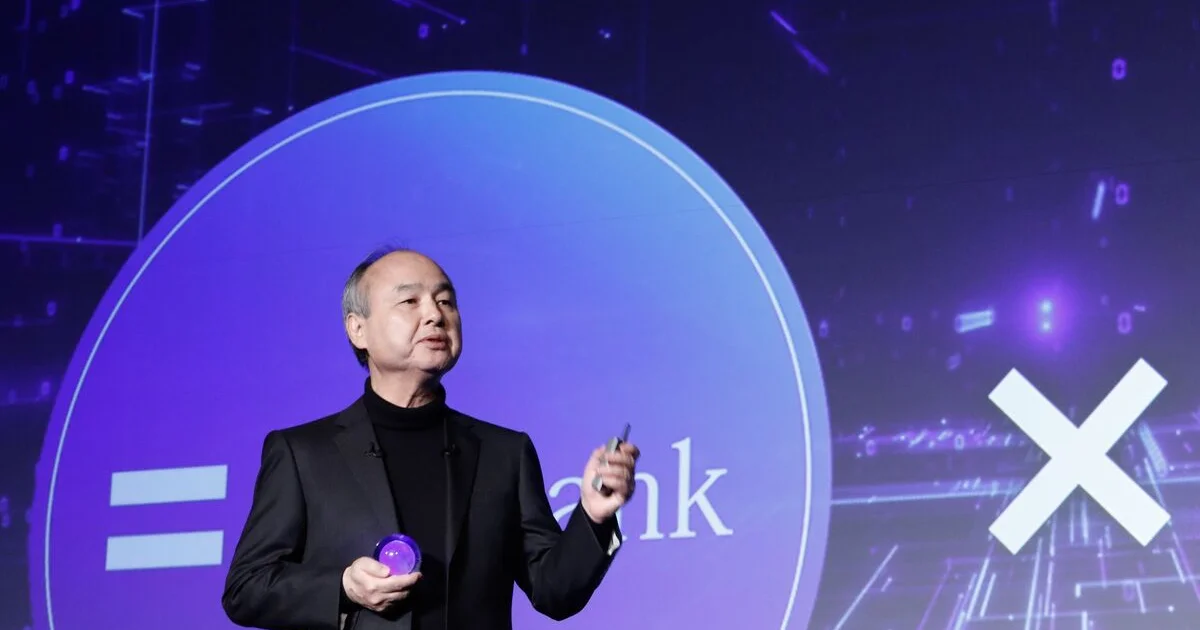
Five cents on the dollar. That's what enterprises are getting from their GPU investments, according to a Cast AI report covered by VentureBeat. Average utilisation sits at 5% across enterprise AI workloads. Meanwhile, Anthropic's implied valuation on secondary markets just crossed $1 trillion, and SoftBank can't convince banks to lend $10 billion against its OpenAI stake without taking a 40% haircut.
These three stories sound like they come from different sectors. They don't. They're the same story: the AI industry's financial narrative has outrun the people whose job is to stress-test it.
Start with the lenders. SoftBank wanted a $10 billion margin loan backed by its OpenAI shares. Banks looked at the collateral (a private company valued at $852 billion with no public float) and offered to lend against $6 billion instead. Bloomberg reported the pushback came from discomfort with both the loan structure and the private valuation itself, despite SoftBank having secured a record $40 billion bridge loan earlier this year partly to fund its OpenAI investments through Stargate. Banks are not visionaries. They're the financial system's professional sceptics, and when they won't lend at full price, they're telling you how much of a valuation is narrative versus collateral.
Then there's Anthropic. The Decoder reports its secondary-market valuation on Forge Global has hit $1 trillion, nearly triple the $380 billion primary round from three months ago, surpassing OpenAI's $880 billion on the same platform for the first time. The revenue growth backing this is real: annualised revenue approaching $45 billion, up fivefold, driven by Claude Code and enterprise API demand. But the detail that should give you pause: a planned IPO would reportedly target $400–500 billion. Half the secondary price. The gap between what insiders think Anthropic is worth to public markets and what eager secondary buyers will pay is itself a measure of how far price has drifted from what underwriters will put their names on.
This pattern has a name in real estate: the appraisal gap. When a buyer offers above asking and the bank's appraiser says the house isn't worth the bid, the deal stalls unless the buyer covers the difference in cash. The AI industry is living in an appraisal gap right now. The bids are enormous. Lenders, underwriters, anyone who has to put their own capital at risk for a defined return: they keep coming in lower.
And the GPU utilisation numbers show why they might be right. VentureBeat's coverage of Cast AI's data reveals that enterprises are overprovisioning everything: CPU overprovisioning surged from 40% to 69%, memory overprovisioning sits at 79%, and AWS quietly raised reserved H200 GPU prices by roughly 15% in January, the first meaningful hike since EC2 launched in 2006. The infrastructure buildout assumes a utilisation curve that hasn't materialised. No team gives back GPUs during a shortage, even idle ones, creating a hoarding paradox where the scarcity itself breeds waste.
The way I see it, the trillion-dollar era isn't fiction. Anthropic's revenue trajectory is extraordinary. The demand for AI compute is real. But there's a difference between believing AI will be transformative and believing every dollar currently priced into AI equity and infrastructure will generate a return. The lenders cutting SoftBank's loan, the IPO target at half the secondary valuation, the 5% GPU utilisation — these are all the same signal: the people who have to show their working are arriving at smaller numbers than the people who don't.
For builders, the practical question isn't whether AI matters. It's whether the capital structure around it can survive the distance between what the pitch decks promise and what the spreadsheets actually say.
Read the original on Bloomberg
bloomberg.com