
The trillion-dollar proof of concept
OpenAI filed its trillion-dollar IPO on Friday. Days earlier, one of its models disproved an 80-year-old maths conjecture that amazed the field. Yet the filing follows a quarter with a negative 122% operating margin. The technology has never been more convincing; the business case has never been more precarious.
Fortune
OpenAI's trillion-dollar IPO filing raises more questions than it answers
OpenAI's trillion-dollar IPO filing raises more questions than it answers.
fortune.com
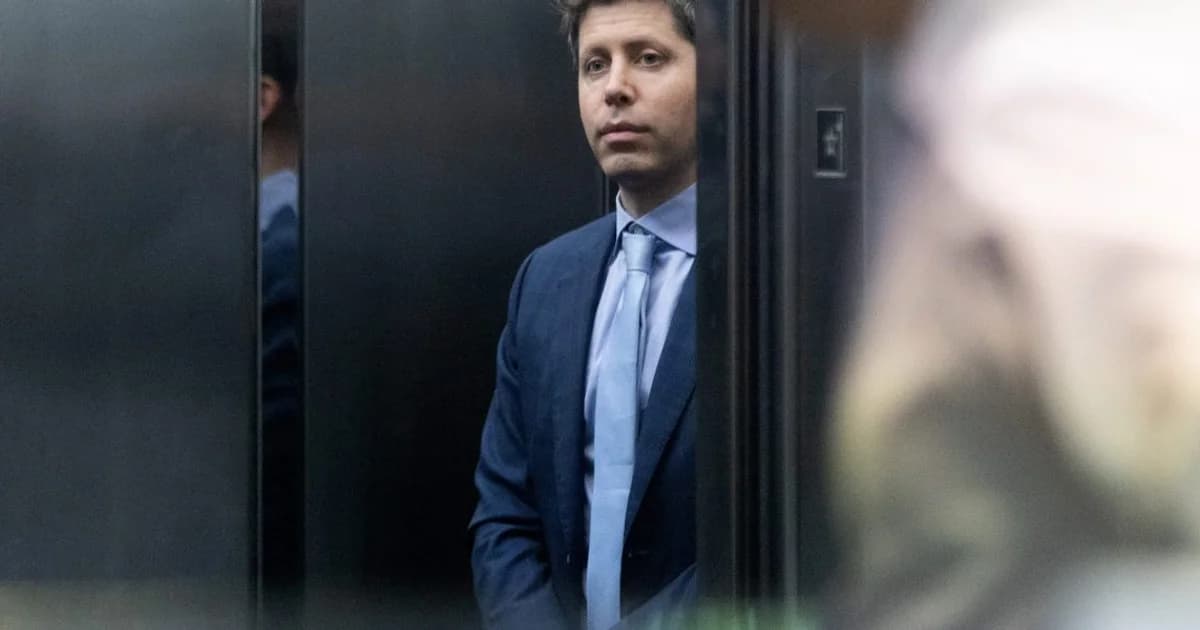
An OpenAI reasoning model independently disproved a geometry conjecture that had stood since the 1940s, discovering an infinite family of point arrangements using deep algebraic number theory that no one prompted it to learn. Days later, the company behind that model filed for a trillion-dollar IPO. And somewhere between those two events, we learned that OpenAI lost $1.22 for every dollar it earned in Q1 2026.
Hold those three facts in your head simultaneously. They don't resolve easily.
The conventional reading is that this is a bubble: a company burning cash at a staggering rate, dressing up a loss-making operation in breakthrough headlines to juice a public offering. And you can make that case. A negative 122% operating margin on $5.7 billion in quarterly revenue is an extraordinary burn rate. ChatGPT's weekly active users have plateaued at 905 million. Plus subscribers are projected to drop from 44 million to 9 million as OpenAI shifts towards cheaper, ad-supported tiers. These are not the metrics of a company that has figured out its business model.
But here's what that reading misses: the Erdős result is real. External mathematicians verified it. A general-purpose reasoning model, not one fine-tuned for mathematics, produced a proof that surprised people who have spent their careers in the field. That's not marketing or a polished demo. That's a capability that didn't exist two years ago.
The proof-of-concept trap
The pattern here looks less like a tech bubble and more like what the pharmaceutical industry calls the "valley of death": the gap between a compound that works in the lab and one that works as a business. Plenty of genuinely effective drugs never make it to market because the economics of manufacturing, distribution, and pricing don't close. The science is real. The product isn't.
OpenAI may be building the most impressive technology of the decade while simultaneously failing to turn it into a sustainable company. The S-1, filed confidentially, will eventually have to reconcile these two realities. Public market investors will soon be asked to decide whether a model that can disprove 80-year-old conjectures is worth a trillion dollars when the company selling access to it loses money on every customer.
I think the honest answer is: nobody knows. And that's the problem with pricing a proof of concept.
For builders, the practical question is sharper than the investment question. If OpenAI's path to profitability runs through ad-supported free tiers and a shrinking subscriber base, the API pricing your product depends on is a policy decision, not a market outcome. It can change overnight, and the IPO pressure to show margin improvement makes it more likely that it will.
The model that solved Erdős didn't need a business model. Your product does.
Read the original on Fortune
fortune.com